What Makes Atlanta’s Independent Schools Different
If you're weighing your options for independent schools in Atlanta, you've probably noticed there's no shortage of choices. Public schools, charter schools, parochial schools, and private schools all promise a strong education, and from the outside, it can be hard to tell what actually separates one from another.
We understand that feeling. Since 1971, Atlanta Area Association of Independent Schools has helped Atlanta-area families navigate their education choices and find the one school where their child will truly belong. Our 68 member schools serve more than 40,000 students across metro Atlanta. What we've learned along the way is simple: independent schools work best when they're built around the students in front of them, not a one-size-fits-all approach.
That distinction matters more than most families realize when they start looking closely. So let's walk through what actually sets these schools apart, and how to tell if that difference is the right fit for your child.
TL;DR—What Makes Atlanta's Independent Schools Different
No time to read? Here’s a summary:
- Independent Governance: Governed by their own Boards of Trustees, allowing schools to tailor curricula, calendars, and teaching styles without state-mandated constraints.
- Smaller Class Sizes: A lower student-to-teacher ratio gives educators the time to provide individualized attention and build meaningful relationships.
- Focus on Lifelong Curiosity: Learning is structured around deep engagement and curiosity rather than standardized test preparation.
- Diverse School Philosophies: Options range from religious to secular, day to boarding, and traditional to specialized support for learning differences.
- Vetted Standards & Cooperation: Accredited member schools collaborate on best practices and follow shared admissions timelines to support families.
Independent Schools Set Their Own Course
The word "independent" isn't just a label. It describes how these schools are run.
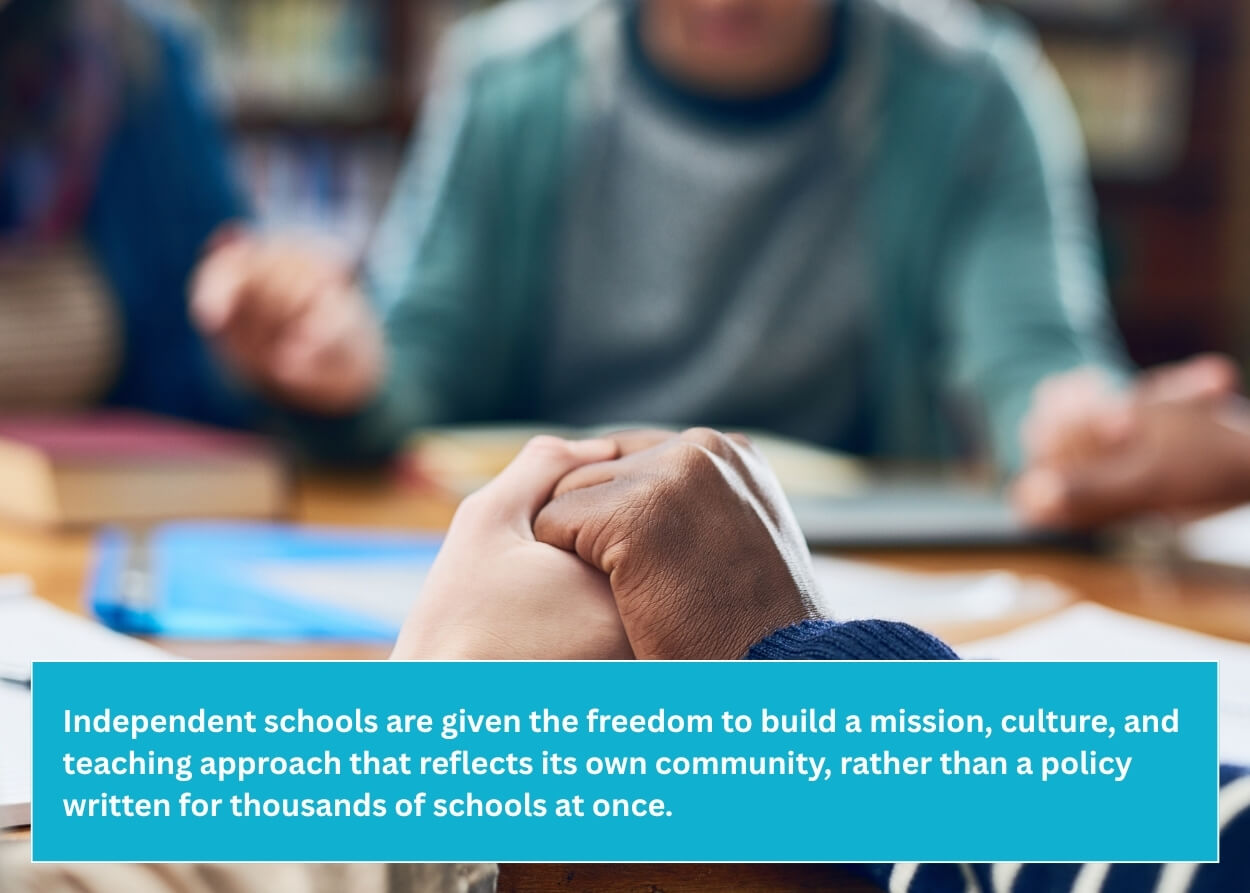
Independent schools are governed by their own Board of Trustees and led by a Head of School, not a school district or a corporate office. That means they aren't required to follow a single state curriculum or a standardized calendar of assessments. According to the National Association of Independent Schools, this independence gives each school room to build a mission, culture, and teaching approach that reflects its own community, rather than a policy written for thousands of schools at once.
In practice, this means two independent schools ten minutes apart can look completely different. One might lean into hands-on, project-based learning. Another might favor a more traditional, structured classroom. Neither approach is wrong. The goal is finding the one that matches how your child actually learns.
This same independence shapes daily life beyond the classroom too. Independent schools set their own calendars, choose their own co-curricular programs, and decide how much weight to put on arts, athletics, or service learning. That freedom is exactly why no two AAAIS member schools feel alike, even when they sit just a few miles apart.
Smaller Classes Create Room for Real Attention
Ask any parent who has toured an independent school what stood out, and class size is often mentioned
Nationally, private schools average about 12.5 students per teacher, compared to 15.4 in public schools, according to data from the National Center for Education Statistics. That difference sounds small on paper, but in a classroom, it changes everything.
A teacher with fewer students can:
- Notice when a child is quietly falling behind, before it becomes a bigger problem
- Adjust a lesson in real time based on how the room is responding
- Build a relationship with each student, not just a roster
Edutopia's research on personalized learning points out that the strongest version of personalized learning isn't about technology or software. It's about teachers who have the time and space to actually know their students. Smaller classes make that possible.
A Community Built Around Learning, Not Just Curriculum
Here's the deeper shift many parents notice once their child settles into an independent school: the goal isn't just covering material. It's teaching a child how to keep learning long after the test is over.
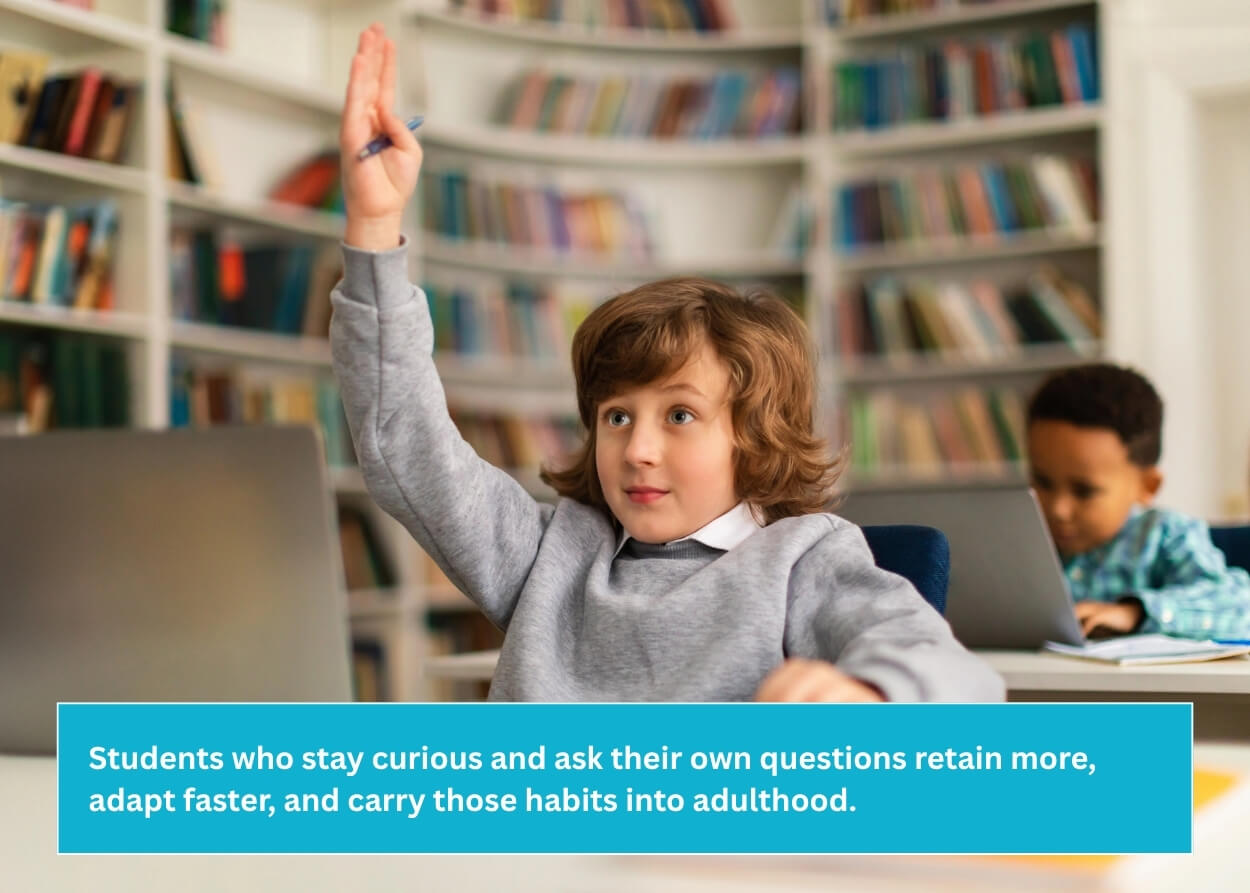
The OECD's 2024 research on curiosity as a learning skill makes the case plainly: students who stay curious and ask their own questions retain more, adapt faster, and carry those habits into adulthood. That's the kind of learning independent schools encourage and develop in their students. Small classes and steady teacher relationships give students the chance to ask questions, make mistakes, and try again, without getting lost in a crowd.
This is also where student support services matter most. Some of our member schools keep a more traditional, structured approach to teaching. Others focus specifically on students with learning differences, offering a 'school within a school' model that gives extra support without pulling a child out of their community. Whatever the structure, the point is the same: meet the student where they are, so learning keeps building instead of stalling out.
Think of it this way: a child who learns to ask good questions in third grade is building a habit that will serve them in a college seminar or a first job interview. Independent schools aim for that kind of learning, the kind that outlasts any single school year.
Room for Every Family's Philosophy
Independent schools aren't a single mold. Among our member schools, you'll find:
- Religious and secular schools, so families can choose an education that matches their values
- Boarding options, including The Darlington School in Rome and Atlanta International School
- Wide-ranging sizes, from under 50 students to more than 2,500
- Every age range, some starting with toddlers, others beginning in high school
Because of this variety, we operate on cooperation, not competition. If a school isn't the right match for your child, that school will help point you toward one that is. No single school is meant to be right for every family.
Standards Families Can Rely On
With this much variety, we want you to feel confident about two things: that every member school meets a high standard, and that you can find the one that truly aligns with your family.
Every AAAIS member school is accredited by a regional or national agency, following our Principles of Good Practice. That accreditation isn't a one-time badge. It requires ongoing self-study, peer review, and follow-up, covering everything from admissions practices to school finances to student services.
Member schools also collaborate with each other, sharing best practices and new ideas rather than competing for the same families. That collaboration is part of why the whole community keeps getting stronger, not just any single school. It's also why member schools share a common notification date each spring, so families can apply to more than one school and compare offers without pressure to commit early.
Finding the Right Fit for Your Child
Knowing what makes independent schools different is only half the equation. The other half is figuring out which one fits your child.
A few steps that help:
- List your priorities first. Class size, learning philosophy, religious affiliation, or specific support services: decide what matters most before you start touring.
- Visit in person. A campus tells you things a website can't. Watch how students and teachers talk to each other in the hallway.
- Talk to current families. They can tell you what a typical week actually looks like for their child.
- Ask about support services early. If your child has a learning difference or a specific need, find out how each school handles it before you fall in love with a campus.
- Use our school search tool to filter member schools by location, size, and focus.
None of these steps require you to become an expert overnight. They just help you get clear on your child's needs. With these steps, you can recognize which school truly fits when you find it.
Your Child's Next Chapter Starts Here
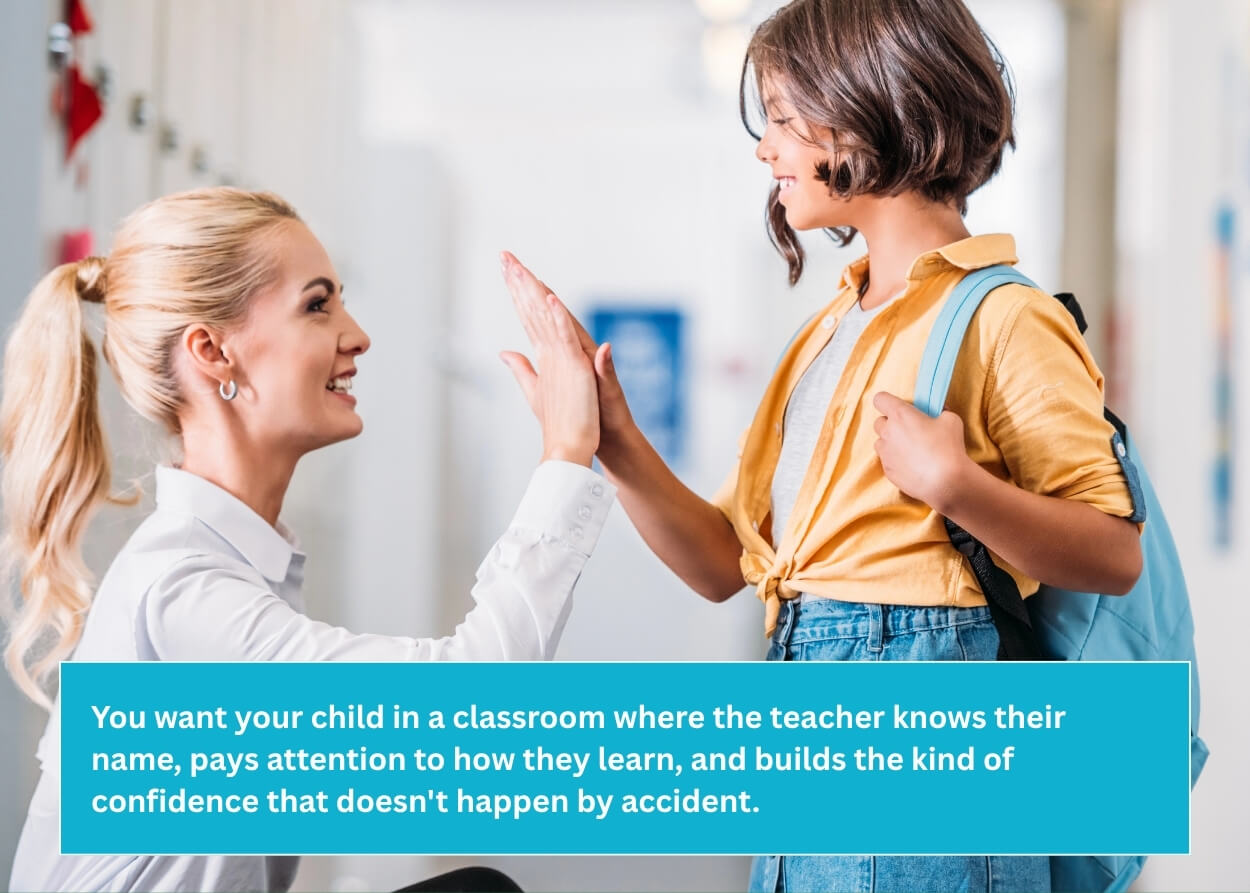
You want your child to walk into a classroom where the teacher already knows their name and is paying attention to them and how they learn best. You want them raising their hand because they're curious, not because they have to. That kind of confidence doesn't happen by accident. Getting your family there, matched with the school built for it, is exactly why we exist.
If you're ready to start exploring, visit our school search tool to browse member schools by location and focus, check our admissions calendar for upcoming open houses, or reach out to us directly with any questions along the way.
The right school is out there. We're here to help you find it.